


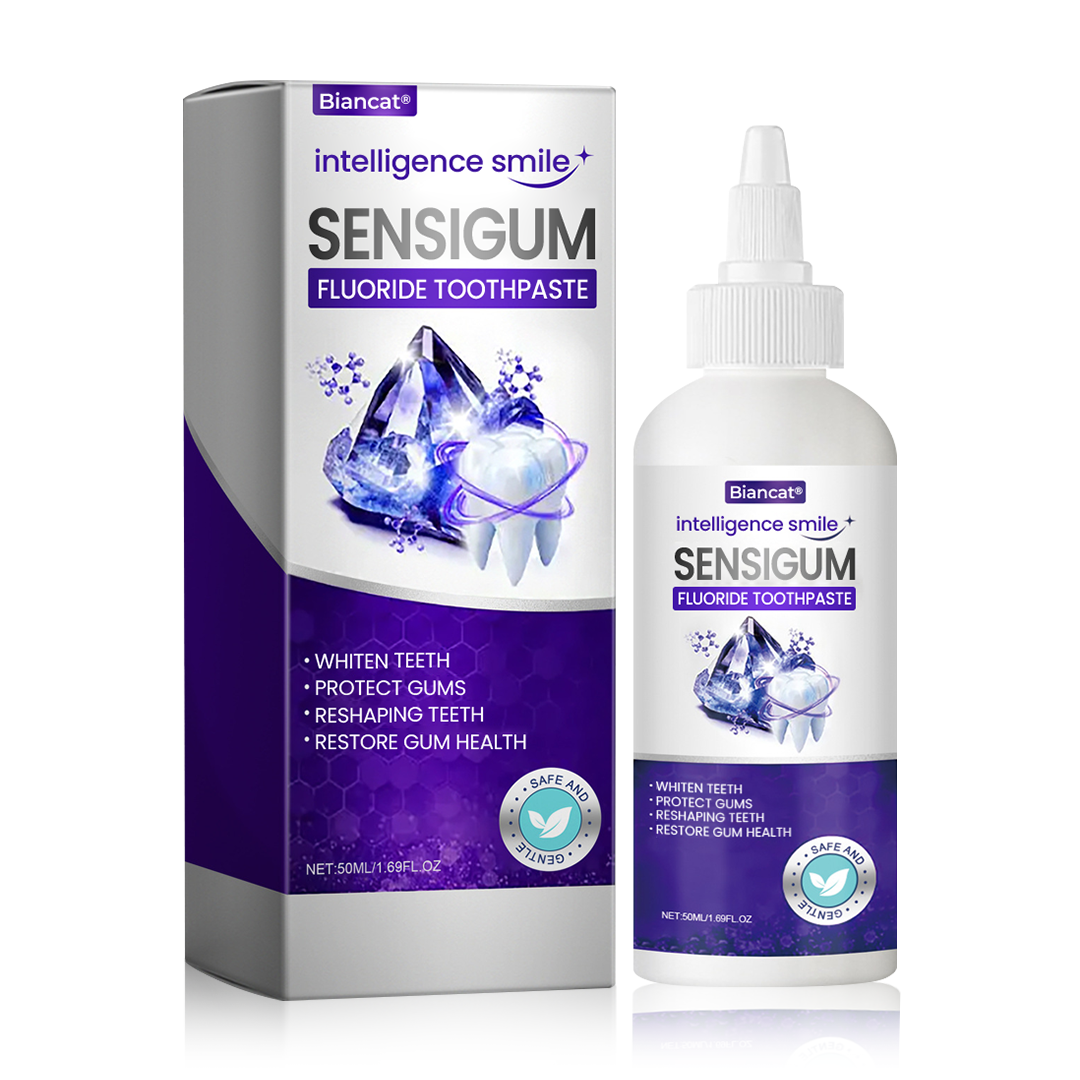
Fluoride Toothpaste
Fluoride Toothpaste
🦷 Fluoride Protection for Stronger Enamel
Supports daily cavity defense and enamel resilience
⚡ Noticeably Less Sensitivity in 7 Days*
Helps reduce discomfort from hot, cold, and sweet
🦷 Helps Remove Plaque & Surface Buildup
Supports a cleaner, smoother tooth surface
🌿 Soothes Irritated, Sensitive Gums
Helps improve comfort along the gumline
💧 Gentle Daily Formula — No Harsh Burning
Designed for sensitive teeth and everyday use
🛡️ Complete Oral Care in One Routine
Clean, protect, and support gums with every brush
Couldn't load pickup availability
More than 120,000 customers have improved their oral care routine and regained confidence in their smile

-
Ordered
- - -
Order Ready
- - -
Delivered

Fluoride Toothpaste



Gum Sensitivity and Gum Recession — What Are They?
Gum sensitivity and gum recession often develop gradually. Plaque buildup, daily irritation, aggressive brushing, and a weakening enamel surface can all contribute to a mouth that feels more reactive over time. As people get older, teeth can become more sensitive to hot, cold, and sweet foods, while the gums may begin to feel weaker, more irritated, or less resilient than before.

When plaque and buildup stay on the teeth for too long, they can make the gumline feel sore and uncomfortable.
This may leave the whole mouth feeling less fresh, more sensitive, and harder to care for comfortably.

That’s why everyday brushing with the right toothpaste matters. A fluoride toothpaste designed for sensitive teeth and gum care can help support cleaner teeth, stronger enamel, fresher breath, and a more comfortable brushing experience.

Advanced Oral Care Backed by Trusted Standards
98.6% of customers are satisfied with the results
“I had been dealing with tooth sensitivity, early signs of tooth decay, and ongoing gum discomfort for a while, and it was starting to make everyday eating and drinking uncomfortable. A friend suggested I try SensiGum Fluoride Toothpaste, so I started using it every day.Within the first week, my teeth felt cleaner, less sensitive, and my gums felt more comfortable and easier to care for.”
How does SensiGum Fluoride Toothpaste work on sensitive teeth and gums?
-

Step 1: Help loosen plaque and soften surface tartar buildup
SensiGum Fluoride Toothpasteis designed to help lift away everyday plaque and loosen stubborn surface buildup along the teeth and gumline. As brushing removes this rough, coated layer, teeth feel smoother, the gumline looks cleaner, and the mouth feels fresher after each use.
-

Step 2: Help calm irritated gums and reduce sensitivity
As the formula helps clean away buildup along the teeth and gumline, it also supports gums that feel irritated, puffy, or sensitive. This helps reduce the feeling of discomfort caused by hot, cold, sweet foods, or daily brushing, while promoting a cleaner, calmer oral environment.
-

Step 3: Healthier-looking gums in as little as 7 days
Thanks to its advanced gum-care formula, SensiGum Fluoride Toothpastehelps support healthier-looking gums in as little as7 days.
-

Step 4: Long-term gum protection
It offers more than immediate relief – it provides long-term protection for your gums. The antioxidant support of Bee Venom and Coenzyme Q10 helps defend against daily oral stress, whileHyaluronic Acidhelps maintain comfort and moisture balance, and Fluoride helps strengthen enamel for everyday protection.


Advanced, comprehensive oral care powered by 4 key ingredients
This multi-action formula combines four carefully selected ingredients to help support a cleaner mouth, healthier-looking gums, and a more comfortable brushing experience.

Here are some of our satisfied customers
-

“I was struggling with plaque buildup, gum discomfort, and sensitivity that made eating and drinking certain things unpleasant. I started using Biancat® SensiGum Fluoride Toothpasteas part of my regular routine, andwithin the first 7 daysmy mouth felt noticeably calmer. By the end of the first week, my gums felt less irritated, my teeth felt less reactive, and brushing was much more comfortable. It made a real difference in how my whole mouth felt.”
-

“I had dealt with gum discomfort for years and tried a lot of different products, but most of them felt either too harsh or not effective enough. I decided to try SensiGum Fluoride Toothpaste instead, and I’m glad I did. After 30 days of consistent use, my gums felt better supported, my teeth felt more comfortable, and my whole oral care routine finally felt easier to keep up with.”
-

I never thought a toothpaste could make this much of a difference. I was looking for something to help with general dinginess and gum health, and SensiGum delivered on both. My teeth are noticeably whiter, but more importantly, they feel ''stronger.'' It lifts away the daily grime so easily that my natural smile finally gets to shine through. I’m smiling in photos again!


Instructions for Use
1. Apply: Squeeze a suitable amount of SensiGum Fluoride Toothpaste onto your toothbrush.
2. Brush: Brush gently along your teeth and gumline for 2–3 minutes, making sure the formula reaches areas prone to plaque buildup and sensitivity.
3. Rinse: Rinse your mouth thoroughly after brushing.
Recommended Frequency: Use twice daily, morning and evening, for best results.For continued gum care support, use consistently for at least 7 days, and continue daily use for ongoing protection.
FAQs
Q1: How often should I use it?
Q1: How often should I use it?
A1:For best results, use ittwice a day, morning and evening, as part of your normal brushing routine.
Q2: How soon can I expect to notice a difference?
Q2: How soon can I expect to notice a difference?
A2:Many users begin to notice a more comfortable brushing experience and less gum sensitivity within 7 days of consistent use. Continued daily use may provide more visible improvement over time.
Q3: Is it suitable for sensitive teeth and irritated gums?
Q3: Is it suitable for sensitive teeth and irritated gums?
A3:Yes. The formula is designed for people who experience discomfort from hot, cold, sweet foods, or brushing, while also supporting gums that feel irritated or reactive.
Q4: Can it help with plaque buildup and bad breath?
Q4: Can it help with plaque buildup and bad breath?
A4:Yes. With regular brushing, it helps remove everyday plaque and surface buildup while supporting a cleaner-feeling mouth and fresher breath.
Q4: Can it help with plaque buildup and bad breath?
Q4: Can it help with plaque buildup and bad breath?
A4:Yes. With regular brushing, it helps remove everyday plaque and surface buildup while supporting a cleaner-feeling mouth and fresher breath.
Q5: Will it feel harsh or cause a burning sensation?
Q5: Will it feel harsh or cause a burning sensation?
A5: The formula is designed to provide a gentler brushing experience. However, if you have severe oral discomfort, persistent bleeding, loose teeth, or worsening symptoms, you should consult a dental professional.
Q6: Can I use it if I am sensitive to bee-derived ingredients?
Q6: Can I use it if I am sensitive to bee-derived ingredients?
A6: The bee venom in SensiGum Fluoride Toothpaste is incorporated as a carefully formulated ingredient within the oral care formula and is not equivalent to a live bee sting.